My childhood friend and neighbor Gary Malone was killed in combat in Viet Nam July 28, 1966. On Sunday, September 10, 2023 President Biden stood in front of United States and Vietnamese flags and announced a strategic partnership with Viet Nam, more honestly identified as a pseudonym for military assistance. It is generally understood that this military realignment is to counter balance Viet Nam’s reliance on its neighbor China. China was North Viet Nam’s main supporter when the United States was fighting a 20-year war against it (1955-1975).
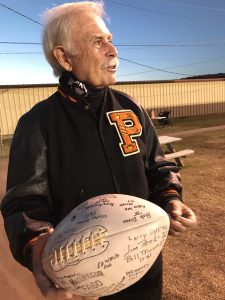
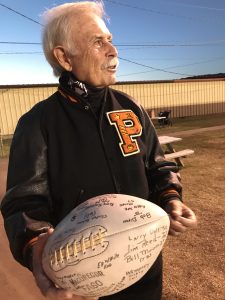
Gary cannot express his feelings about his country’s rapprochement with the people our government sent him to fight. But I may soon get to see his brother, Bud Malone, who along with Gary’s twin, Jerry, also saw combat in Viet Nam. Maybe Bud and I will discuss the war and Gary and Jerry or more likely, since Bud is Osage and we have been friends for almost 80 years, not much will need to be said. Perhaps a song from the musical Les Misérables can help fill the void:
♪….
Oh my friends, my friends forgive me
That I live and you are gone
There’s a grief that can’t be spoken
There’s a pain goes on and on
…
Oh my friends, my friends don’t ask me
What your sacrifice was for
Empty chairs at empty tables
Where my friends will meet no more ♪
When American young people were both fighting and protesting the Viet Nam War our government was issuing vague exhortations about the need to stop the advance of Communism in China and the U.S.S.R. (today’s Russia). In fact, as Gary and 58,000 more members of our generation were serving and being killed in Viet Nam, our government’s pronouncements then sound much like our government’s rationales for war today. We must fight China, Russia, Iran and a myriad of other perceived enemies there now so we will not have to fight them here later. The one constant we can rely on is that old people will do now what old people did then when 22-year-old Gary gave his life for what he believed in. That is, our government will send young people to pay the price.
My guess is Gary would support peace and even friendship now with Viet Nam and even China, Russia, Iran, etc., so other people on all sides might avoid an early death from armed conflict. Of course, I cannot ask Gary today what he would think as if he were an 80-year-old. We all struggle to understand how that puzzling young person we used to be would react today. I do remember I started out believing the government and supporting the war then slowly realized we had been misled by our leaders who were themselves misled by false intelligence and bad judgment. Gentle Reader, does that remind you of our recent wars in Iraq, Afghanistan and even, perhaps, Ukraine?
Peace and friendship with Viet Nam do not denigrate the honorable service of Gary and his fallen comrades. Rather they validate the ideals they stood for. The issue is not was their sacrifice in vain? It was not, as long as we do not forget it and as long as we learn from it. Rest in peace my young friend. Your former adversary and your beloved country have finally come full circle building upon your service. We must now guard against our new alliance helping to lead us into a new conflict with another old enemy. Your memory deserves better.