• Skip to primary navigation
  • Skip to main content

James M. Redwine

  • Books
  • Columns
  • 1878 Lynchings/Pogrom
  • Events
  • About

Me Too Movement

A Difficult Subject

August 18, 2026 by Peg Leave a Comment

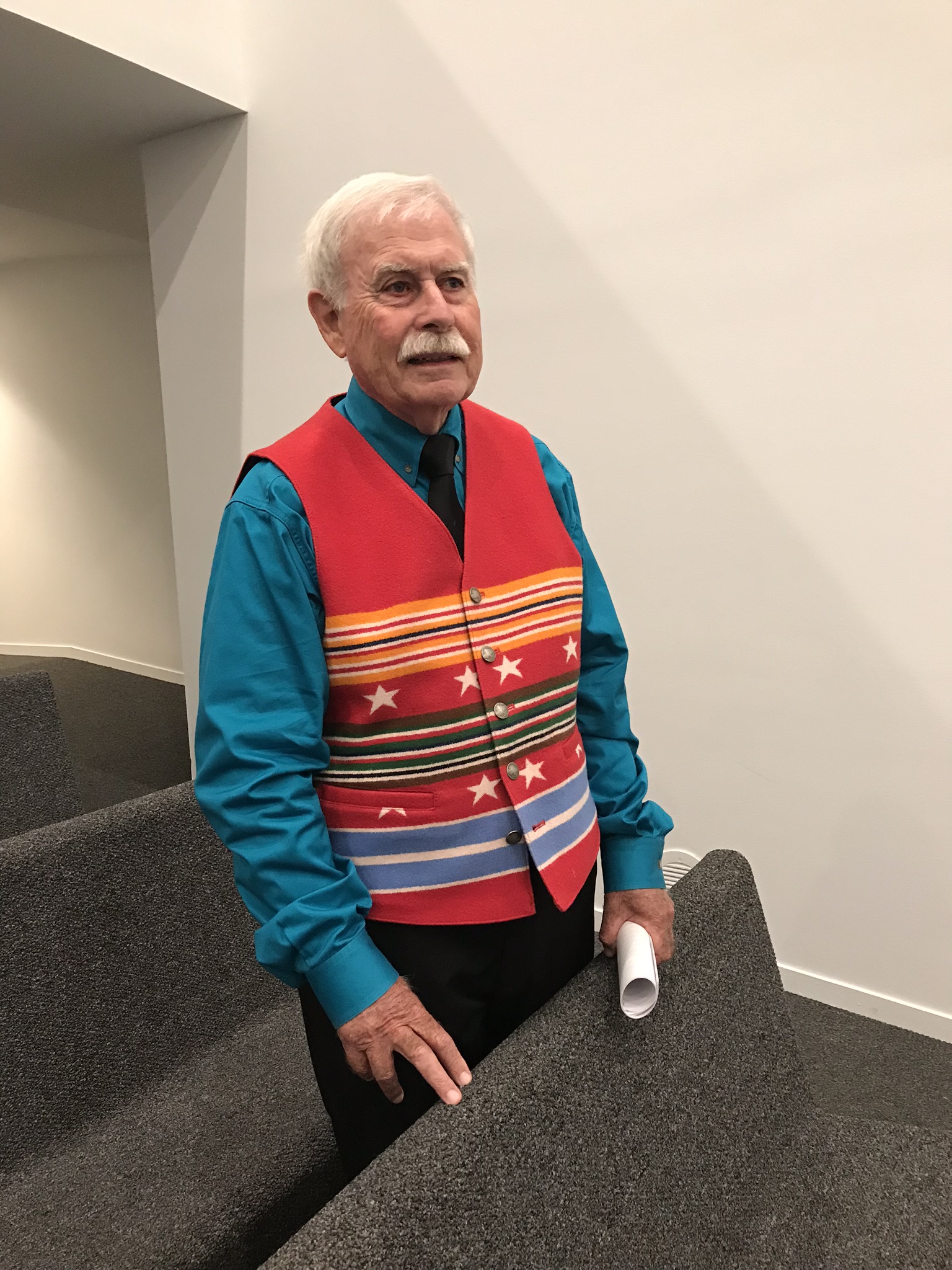
Photo by Peg Redwine

The bedrock of America’s system of criminal law is Due Process with its inviolate premise that persons charged with crimes are presumed to be innocent until and unless proven in court to be guilty. Our United States Constitution and every state’s constitution provides these rights to each of us should we be charged by one of our governmental entities with any offense of a published, written and officially enacted violation. What does it say about the procedure and the presumption of innocence if the identity of the alleged victim is not revealed but the person charged with an offense is named publicly?

We have no burden of any kind to prove our innocence or to even speak in our own defense. We have the right to be represented by a licensed attorney and if we cannot afford to pay for those legal services, the government will do so. We have the right to see, hear and confront our accuser and to cross examine them, under oath, in open court and, in felony cases, before an impartial jury of our peers. We also have the right to compel by law witnesses and other evidence on our behalf. We may appeal any verdict to higher courts. Torture of any kind to force a confession is forbidden. And, we have the right to demand all proceedings be made public so we cannot be tried in a secret tribunal. But, when it comes to allegations of sexual offenses, especially against minors, our legal system ignores several of these vital elements because reality gets in the way of philosophy.

Usually there are only two witnesses to an allegation of a sexual offense and, with young children, one of the two may not be capable of expressing themselves. Also, the legal system is faced with two extremely vital issues. If an offense has actually occurred, how can the wrong be righted and two, if the accused is innocent, how does she or he prove a negative. Further, is society more greatly harmed by a victim who is not believed or by an innocent person whose life is destroyed by a false, or incorrect, allegation? These are at the foundation of our legal and social systems and carry great consequences.

It is not easy to analyze these important issues. Minors are often too young to speak for themselves if they are, in fact, victims. True victims of sexual offenses, while they may feel no guilt, often still feel shame and experience real fear and anxiety that they may not be believed, especially about a beloved relative. Society does not blame the victim of a robbery, but it may wonder about the actions or motivations of a sexual victim.

How can we fairly balance the interests of actual victims, including their reluctance to even admit anything untoward happened, with an accused’s constitutional rights? More importantly, how does an innocent accused ever recover her or his reputation or mental health from a false or inaccurate allegation? Personally, I often worried that my status of never having been a victim or an accused may have affected my judgment as a judge in such cases. Also, I am an adult male, fairly secure financially and a product of a family environment where I was untouched by such influences. Or so I thought.

While I have often had to deal with these issues in my more than fifty years in the legal profession, it was my astonishment at my older sister’s long suppressed trauma and conflict that sharpened my focus. My beloved big sister, who always sought to protect and care for me, finally decided it would be better for herself and me to know that our mother’s father’s sister’s husband had attempted to molest her when she was ten years old. She escaped any physical damage but still suffers the turmoil of anger and guilt. Janie remained silent for over sixty years out of shame and fear of what harm the knowledge of the incident might do to the family.

I know my courageous and generous sister would never tell me such a thing unless it was true and unless she just finally felt compelled to expiate herself now that the other principal has passed and she is fighting heroically against a debilitating illness. So, Judge Redwine, how do I synthesize, analyze and balance this case? What of my years of faith in Due Process and the Presumption of Innocence? Where do we all come down on the Constitution versus the humanity of such realities as the Me-Too movement or child sexual perversion?

As for me, I not only now know about my long-suffering victimized sister, but I know our legal system has ruined the lives of innocent persons who were falsely or incorrectly charged. I guess we just have to take it one case at a time. It is too much of a Gordian Knot for the law to unravel. But, of course, as we humans must admit from time to time, we often can only do our best and if we can only find the answer as through a glass and darkly, it is still our duty to do so.

You can also follow us on Facebook at “Jim Peg Redwine” or Substack “@gavelgamut”

Share this:

  • Share on Facebook (Opens in new window) Facebook
  • Share on X (Opens in new window) X
  • Email a link to a friend (Opens in new window) Email
  • Share on WhatsApp (Opens in new window) WhatsApp

Like this:

Like Loading…

Filed Under: Democracy, Family, Gavel Gamut, Judicial, Justice Tagged With: accused, child sexual perversion, criminal law, due process, Gordian Knot, James M. Redwine, Jim Redwine, Me Too Movement, presumed innocent, sexual offense, United States Constitution, victims

Independence Day

June 26, 2020 by Peg 1 Comment

Lexington Minuteman
Lexington Battle Green, MA

The Fourth of July is called Independence Day with good reason. Our Founders were willing to die for the right to control their own lives. They were not seeking war with the most powerful nation on Earth in 1776. They were not attempting to dictate to King George III how the English should behave. They sought only free will for America to determine its own course. In these troubled times we are now navigating, perhaps a look back to America’s early struggles might be helpful.

We may wish we could ask George Washington or James Madison for advice. But the best we can do is read about past heroes’ courage and sacrifice and try to learn lessons that will help us during our own battles.

For example, one of my heroines is Frances (Mad Fanny) Wright, that fighter for women’s rights, Black rights and freedom from religion who spoke in New Harmony, Indiana on July 04, 1828. Oh, how much we could learn if we could speak with her now. However, we do know she dedicated her life and fortune to eliminating slavery. Had she lived only nine more years she would have experienced the start of the Great Struggle that ended a whole race of Americans’ loss of control over their lives.

Control, isn’t that what matters most to all of us? The visceral need for the freedom to make our own choices is why on that day we now call Patriots Day, April 19, 1775, at Lexington and Concord those suppressed colonists “Fired the shots heard ’round the world”. And in our current political climate when Americans get embroiled in political discussions it sometimes feels as if both sides have muskets at the ready.

When I find myself surrounded by the competing political mini balls, I try to remember this is nothing new. Over the two or three hundred thousand years we Homo sapiens have been around, after air, water, food, shelter and procreation we seem to have two more basic needs: the control of our own lives; and the strong desire to control the thoughts and behavior of others. These two related but directly oppositional impulses apply to groups of people and nations as well. You know, we will each defend to the death the right of our political adversaries to agree with us. But conversations can rapidly turn to confrontation if someone comes down on what we believe is the wrong side of such issues as religion, race, global warming, immigration, war and peace, who should or should not be President of the United States and a thousand other subjects.

The right to control our own lives makes us smile. The desire to control other peoples’ lives can lead to such things as vitriolic statements and sometimes even vicious interchanges in our public and interpersonal interactions. Sometimes today’s discussions about control may center on sexual assault and the “Me Too Movement” or hate crimes and “Black Lives Matter”.

Rape is a terrible crime not because of forced sexual contact, billions of humans have had sexual relations. No, rape is a terrible crime because of the victims’ loss of their right to decide for themselves whether and with whom to have sex. The fear, terror, anger and humiliation caused by losing total control of one’s body is incalculable. It is in itself a life sentence that can lead to permanent bitterness toward and distrust of our legal system much as lynchings can result in an entire race of people living with constant concern about their freedom.

Lynchings, such as those that were committed on the Posey County, Indiana courthouse lawn on October 12, 1878, are a collective denial of another’s right to control their own destiny. And it is not just the victims who lose, but even those who deny justice to others may reap the whirlwinds of retaliation and political correctness.

Wars of aggression, not constitutionally authorized wars for national defense, are our country’s intentional denial of another country’s or people’s right to independently determine their own destiny. One of the main causes of our country’s post-WWII denials of the right of other countries to control their own lives are wars instigated by independent executive action without congressional authorization.

We can each quickly cite evidence of such wars based on false premises and rash executive action. President Lyndon Johnson used the shaky premise of the Tonkin Gulf Resolution to get us hopelessly embroiled in Vietnam. President George W. Bush relied on false intelligence reports that Iraq had weapons of mass destruction and was involved in 9/11. President Bush then precipitously led us into what appears to be an endless and pointless war in the Middle East.  As Pete Seeger’s song “Where Have All The Flowers Gone?” asks us, “When will we ever learn?, when will we ever learn?”

Our Founders’ wisdom of placing the authority to wage war in congress is that such a procedure keeps all of our citizens more closely involved in these grave decisions. And, it requires much more careful deliberation when congress is involved. Also, when we eliminated the military draft, we turned from a citizen minute man type military to a professional and less ecumenical type force. To make the tragic choice to go to war all Americans should feel the direct cost. It is too easy to hire others to impose our will on the powerless. With a professional standing military our armed forces never stand down. And the temptation for any of our presidents to play with these awesome powers as if they were toy soldiers is too intoxicating for most to resist. Of course, the draft is one of the ultimate impositions of loss of control. Our country should only use it when our national survival is truly at issue. And then it should include all able-bodied adult citizens. Not everyone needs to serve on the front lines but everyone can serve somehow.

One of the good things we received from one of our British cousins were John Locke’s Enlightenment philosophies as highlighted by the doctrine of separation of governmental powers. Our independence as a nation has survived great trauma due in large part to our three separate and equal political powers: Executive; Legislative; and, Judicial. We forget this at our peril. Control of our lives is an inherent need for individuals and nations and, if lost, can lead to long-term bad effects for both the invaders and the invaded. Freedom of choice is essential to our personal and national well-being. Our Founders enshrined that opportunity for us in our Constitution and that is what we celebrate on Independence Day as we struggle to afford that right to all of our citizens.


Share this:

  • Share on Facebook (Opens in new window) Facebook
  • Share on X (Opens in new window) X
  • Email a link to a friend (Opens in new window) Email
  • Share on WhatsApp (Opens in new window) WhatsApp

Like this:

Like Loading…

Filed Under: America, Democracy, Events, Executive, Gavel Gamut, Judicial, Legislative, New Harmony, Patriotism, Posey County Lynchings, Presidential Campaign, Women's Rights Tagged With: 9/11, Black Lives Matter, Black rights, Constitution, control of our own lives, Enlightenment, Executive power, fired the shots hear 'round the world, Fourth of July, Frances (Mad Fanny) Wright, freedom from religion, freedom of choice, George Washington, global warming, immigration, Independence Day, James M. Redwine, James Madison, Jim Redwine, John Locke, Judicial power, King George III, Legislative power, lynchings, Me Too Movement, our Founders, Patriots Day, Pete Seeger, President George W. Bush, President Lyndon Johnson, race, rape, Tonkin Gulf Resolution, Vietnam, war and peace, wars of aggression, who should or should not be President, women's rights

The Right To Matter

February 29, 2020 by Peg Leave a Comment

From www.270towin.com

It was not the British Parliament’s tax on tea that caused the Boston Tea Party on December 16, 1773; it was the denial of the Colonists’ right to be represented in Parliament.

It is not the sexual part of unwanted sex that matters to the Me Too Movement, we Homo sapiens have spent the last 200 to 300 thousand years engaging in sex; it is the “unwanted” factor that is objectionable.

And when our Founders were barely able to cobble together our Republic it was not the fact that some of the Thirteen Colonies had much greater populations than others or much greater wealth than others that almost caused the United States to be simply thirteen entirely separate entities; it was the fear by both the more populous and less populous colonies that their voices would not sufficiently matter.

There were many reasons why and how our constitutional democracy survived colliding circumstances, desires and egos but two of the most significant compromises were the Proportional Representative construct and the Electoral College.

Large states accepted the compromise that in the Senate each state would have two and only two Senators because their proportional influence was recognized by having the number of Congressional Representatives determined by population. Smaller states accepted this arrangement in like manner because they would have an equal voice in at least one of the two Congressional bodies, the Senate, even though they would have fewer Congresspersons than larger states.

Then there is the imaginative system of the Electoral College. The Electoral College determines who will be the Executive Branch leaders, the President and Vice President, via a method similar to the proportional representative system. And because the President has the authority to nominate all federal judges, whoever has influence over the election of the President has an indirect voice in the makeup of the third branch of our federal government, the Judicial Branch. Therefore, the Electoral College, whose only job is to meet every four years and vote for the Chief Executive and the Vice President, has some influence over two of the three Branches of our government. Of course, the Executive Branch contains the armed forces, the F.B.I., the D.E.A., etc., etc., etc. And these countless agencies assert immense power over all of us. We certainly want our opinions to matter when it comes to all those aspects of our government.

The number of Electors of the Electoral College is determined by totaling the number of Congressional Representatives each state has and each state’s two senators. The number of Congressional Representatives is derived from each state’s population. So, very similar to the general system of representative/proportional government, where all states have two and only two senators but have differing numbers of Congresspersons based on population, the Electoral College is based on every state having some Electors but more populous states having more Electors than less populous states.

Currently there are 538 members of the Electoral College based on 100 Senators and 438 Congressional Representatives. For example, Indiana has 2 Senators and 9 Congresspersons for a total of 11 Electors and Oklahoma has 2 Senators and 5 Congresspersons for a total of 7 Electors. On the other hand, California has 2 Senators and 53 Congresspersons for a total of 55 Electors. Indiana’s sister state of Illinois has 20 Electors, almost twice as many as Indiana, and Oklahoma’s sister state of Texas has 38, over five times as many as Oklahoma. The District of Columbia has no Senators but does have 3 Electors based on the 23rd Amendment to the Constitution. Three is the least number of Electors of any state. The U.S. Territories do not receive any Electors.

Whichever candidate receives 270 Electoral votes, the current majority of Electors, is elected President. Sometimes the candidate who receives the most popular votes does not receive a majority of the Electoral votes. This always reignites a debate to eliminate the Electoral College and go to a pure one person/one vote system. Such was the case in 2016 when the Democrat nominee Hillary Clinton received 3,000,000 more popular votes than the Republican nominee Donald Trump, but Trump received 304 Electoral votes, which was 77 more than Clinton received. Had this outcome been inverted I suggest the pro/anti-Electoral College debate would have also been inverted.

There certainly are legitimate arguments for modifying or even eliminating the Electoral College system even though the College has helped to assuage the constant yin and yang of large states versus small ones. As for me, having spent most of my life, so far, in either Oklahoma or Indiana, I do not wish to rely upon the tender mercies of the few lumbering giant states with huge populations of voters that might deign to turn a deaf ear to my concerns and those of the other residents of the numerous less populous states.

Share this:

  • Share on Facebook (Opens in new window) Facebook
  • Share on X (Opens in new window) X
  • Email a link to a friend (Opens in new window) Email
  • Share on WhatsApp (Opens in new window) WhatsApp

Like this:

Like Loading…

Filed Under: America, Democracy, Elections, Gavel Gamut, Indiana, Oklahoma, Presidential Campaign Tagged With: armed forces, Boston Tea Party, British Parliament, Colonist, congressional representatives, congresspersons, D.E.A., debate to eliminate the Electoral College system, democracy, Donald Trump, electoral college, executive branch, F.B.I., federal judges, Founders, Hillary Clinton, Illinois, Indiana, James M. Redwine, Jim Redwine, judicial branch, large states, majority of electoral votes, Me Too Movement, Oklahoma, president, proportional representative construct, Republic, senators, small states, tax on tea, Texas, third branch of government, Thirteen Colonies, Vice President

Every Month Has A Fourth

July 5, 2019 by Peg Leave a Comment

America’s court system has several purposes but, in general, they all amount to resolving controversies. Citizens need some place to help them settle their differences with other citizens so everyone can get on with their lives. And one of the most important thing judges can do to start the resolution of a court case is to encourage the competing parties to find common ground. If the competing parties recognize they have similar needs and if all parties can at least consider the possibility that an outcome that benefits their adversary may also benefit themselves, a path leading to a reasonable compromise may appear.

Our country has often struggled with competing strongly held beliefs even going so far as resulting in the Civil War. But short of actual armed conflict we have suffered through numerous periods where political issues at first appeared to be intractable but were assuaged by the parties finding common ground. Our current public debate over such issues as immigration or war with Iran or several other significant matters may feel as if the only solutions are pistols at ten paces. However, when Americans are reminded we have more and better reasons to agree than disagree, we can begin to accommodate, and even celebrate, our differences. Such is the beauty of our national birthday party. Perhaps we should consider having similar periods of healing every month.

Peg and I participated in one such Fourth of July celebration in New Harmony, Indiana last week. Because New Harmony is a small town we personally knew where many of the people attending and involved in the party stand on volatile issues such as immigration, global warming, military involvement, the Me Too Movement, Black Lives Matter and, especially, partisan politics. Many of our friends and family are well informed and passionate on these and other matters. Conversations have often seemed more like a contact sport than reasoned debate.

But for several hours on the Fourth of July we all found common ground in the Declaration of Independence, songs of praise and a First Amendment type respect for our hard won honorable common heritage. In our culture we have numerous monthly events that each of us enjoys and respect such as club and association gatherings, sporting events, birthdays and anniversaries. Maybe we should set aside some time every month to renew our common faith in America.

The Redwines at Maclure Park, New Harmony, Indiana
Photo by Lois Mittino Gray

Share this:

  • Share on Facebook (Opens in new window) Facebook
  • Share on X (Opens in new window) X
  • Email a link to a friend (Opens in new window) Email
  • Share on WhatsApp (Opens in new window) WhatsApp

Like this:

Like Loading…

Filed Under: America, Democracy, Events, Gavel Gamut, New Harmony, Patriotism Tagged With: 4th of July, America, armed conflict, Black Lives Matter, Civil War, competing strongly held beliefs, Declaration of Independence, finding common ground, First Amendment, James M. Redwine, Jim Redwine, Me Too Movement, national birthday party, New Harmony, War in Iran

© 2026 James M. Redwine

Loading Comments...
%d