• Skip to primary navigation
  • Skip to main content

James M. Redwine

  • Books
  • Columns
  • 1878 Lynchings/Pogrom
  • Events
  • About

Teddy Roosevelt

To Those Who Dare And Care

November 9, 2018 by Peg Leave a Comment

As with much of our philosophy we can thank the ancient Greeks for the concept of the Phoenix, something (or someone) who rises from the ashes of defeat to be even better than before. Or as we all remember our parents attempting to convince us, we learn more from defeat than victory. This provides scant solace at the time of a loss or an embarrassment but most of us eventually see the validity of wisdom born of hardship and the shallowness of temporary acclaim.

It is likely you are already aware that Rudyard Kipling (1865-1936) and Teddy Roosevelt (1858-1919) among many others have already written about these concepts and certainly more presciently than I. Kipling in his poem If advised his son and the rest of us:

“If you can dream and not make dreams your master,
If you can think and not make thoughts your aim,
If you can meet with Triumph and Disaster and
Treat those two imposters just the same, ….
Then you will be a man my son.”

Teddy Roosevelt in his thesis, The Man in the Arena, wrote of greatness born of failure:

“It is not the critic who counts; not the man who points out how the strong man stumbles, or where the doer of deeds could have done them better. The credit belongs to the man who is actually in the arena, whose face is marred by dust and sweat and blood; who strives valiantly; who errs, who comes short again and again, because there is no effort without error and shortcoming; but who does actually strive to do the deeds; who knows great enthusiasms, the great devotions; who spends himself in a worthy cause; who at the best knows in the end the triumph of high achievement, and who at the worst, if he fails, at least fails while daring greatly, so that his place shall never be with those cold and timid souls who neither know victory nor defeat.”

Naturally, winners of elections are justly elated and losers are hurt and depressed. I have lost an election and have won some. What I discovered was my loss and my victories had less to do with me than with the vicissitudes of a fickle electorate. Most voters had no idea who I was and both the victories and the loss were mostly happenstance.

On the other hand, for our democracy to endure someone has to be willing to suffer the slings, arrows, and expense of running for office. So, to all those who cared enough and dared enough to seek to serve the rest of us, both winners and others, I say, Thank You!
Share this:

  • Share on Facebook (Opens in new window) Facebook
  • Share on X (Opens in new window) X
  • Email a link to a friend (Opens in new window) Email
  • Share on WhatsApp (Opens in new window) WhatsApp

Like this:

Like Loading…

Filed Under: America, Democracy, Elections, Gavel Gamut, Patriotism Tagged With: ancient Greeks, defeat, election, greatness born of failure, If, James M. Redwine, Jim Redwine, Phoenix, Rudyard Kipling, Teddy Roosevelt, The Man in the Arena, to those who dare and care, victory

Feet of Clay

August 25, 2017 by Peg Leave a Comment

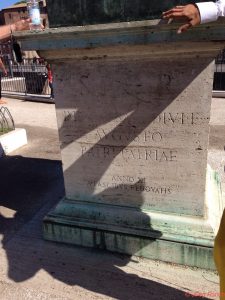
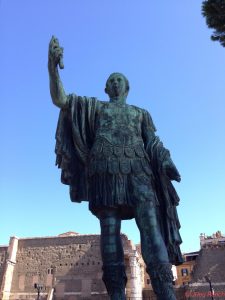
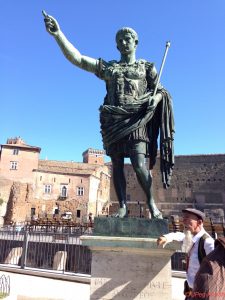
Picture by Peg Redwine

William Shakespeare had Marc Antony preach these words at Julius Caesar’s funeral:

“The evil that men do lives after them; the good is oft interred with their bones.”

Act III, Scene 2

Antony went on to list Caesar’s accomplishments in addition to his being ambitious. There was some good, some bad. Perhaps the citizens of Rome should have erected a partial statue of Caesar honoring just the good parts.

This could be a solution to our current controversy over monuments to historic figures. A committee could be composed of people who admire the works of a now dead leader and those who find the figure’s behavior flawed. A few examples might be helpful.

George Washington survived Valley Forge, presided over the Constitutional Convention and refused the opportunity to be named an emperor. On the other hand he owned hundreds of slaves and helped enshrine slavery into our legal system. The Committee might consider cutting the Washington Monument in half.

Thomas Jefferson was responsible for the Bill of Rights that guaranteed individual liberty but only to twenty-one year old white males. He also owned slaves and had children by one of them. Today such an employer/subject relationship would result in severe censure. Perhaps the Committee might recommend the Jefferson Memorial be closed every other week.

As we search for unblemished heroes to honor we could consider Abraham Lincoln who issued the Emancipation Proclamation. However, he at first averred slavery would be preferable to the disintegration of the Union and the Proclamation did not free all slaves just those in the states of the Confederacy. The Committee could maybe have a disclaimer added as a placard around his statue’s neck.

Andrew Jackson committed adultery, captured Seminole Indians under a flag of truce and as president created The Trail of Tears. On the other hand, he was a courageous and victorious military leader. A short bronze bust could replace his heroic sized statue.

As for Mount Rushmore the Committee would have to remove at least 3 of the 4 figures. Of course, Teddy Roosevelt had a penchant for shooting animals which might upset the ASPCA; so all 4 might have to be erased.

Right here in Posey County, Indiana we have a dilemma about what to do with our most famous citizen. Alvin Peterson Hovey was once Posey Circuit Court Judge, a Civil War general for the Union and our only governor. Unfortunately, he also was instrumental in helping to cover up the murders of seven Black men in October 1878. One of those Black men was shot and stuffed into a hollow tree on a farm owned by Hovey. Will the Committee have to remove the glowing patina from Hovey’s bronze in the Indiana State House?

One might look to Jesus as the paragon of virtue but even he got angry and threw the moneychangers out of the temple. He, also, voiced his hope that the cup of his great travail might pass from him. On the other hand, apparently no one knows what Jesus looked like unless one believes the Shroud of Turin is a clue. I guess the Committee would not be able to find any statues of Jesus to modify.

It appears that history has not provided us with any perfect examples to honor. Maybe the Committee will have to suggest that all statues be modified by substituting feet of clay.

Picture by Peg Redwine

Share this:

  • Share on Facebook (Opens in new window) Facebook
  • Share on X (Opens in new window) X
  • Email a link to a friend (Opens in new window) Email
  • Share on WhatsApp (Opens in new window) WhatsApp

Like this:

Like Loading…

Filed Under: America, Circuit Court, Democracy, Females/Pick on Peg, Gavel Gamut, Judicial, Law, Males, Posey County, Slavery, War Tagged With: Abraham Lincoln, abuse of women, Alvin Peterson Hovey, Andrew Jackson, ASPCA, Bill of Rights, Civil War general, Constitutional Convention, Emancipation Proclamation, emperor, feet of clay, flag of truce, George Washington, governor of Indiana, Indiana State House, James M. Redwine, Jefferson Memorial, Jesus, Jim Redwine, Julius Caesar, Marc Antony, moneychangers, monuments, Mount Rushmore, murders of seven Black men in October 1878, paragon of virtue, Posey Circuit Court Judge, Posey County Indiana, Rome, Seminole Indians, Shroud of Turin, slavery, statues, Teddy Roosevelt, the evil that men do lives after them; the good is oft interred with their bones, The Trail of Tears, Thomas Jefferson, Union, Valley Forge, Washington Monument, William Shakespeare

© 2026 James M. Redwine

Loading Comments...
%d