• Skip to primary navigation
  • Skip to main content

James M. Redwine

  • Books
  • Columns
  • 1878 Lynchings/Pogrom
  • Events
  • About

women's rights

On Her Own

August 21, 2021 by Peg 2 Comments

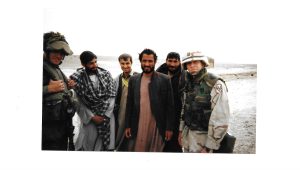
Our son, Jim on right, along with Canadian Platoon Leader & local Afghanis, 04/2002

Abraham Lincoln said he chose to not be a master because he would not choose to be a slave. Life is better if we get to make the choices for ourselves. We may choose unwisely but we would rather be wrong than be told what we can do. Independence of thought is usually within our control but independence of actions, for some, may depend on the largesse of others. Should we lose our independence when we have lived free for years it would be difficult to adjust. Afghanistan comes to mind. Afghanistan? Hey, folks, these columns do not need to be logical, they only need to be in writing. But it is not only the independence of women in Afghanistan that is my current concern but the independence of my older sister in Missouri.

Jane is currently in a hospital bed waiting the results of an MRI (Magnetic Resonance Imaging) test after her most recent fall. When we talked by phone this morning she spoke those dreaded words each of us may someday face, “This may be the end of my independent living.” Janie’s husband of more than fifty years passed away in 2012. She led a full life of public service before Bruce left her and has continued on her own until now. Janie has always been the go-to person for others to get things done. I fear an adjustment may now be required.

Janie grew up with three brothers. While our parents both worked outside our home, Janie used her good sense to keep our oldest brother on task and her two younger brothers from mayhem. Unfortunately, she moved out when she got married and left us to fend for ourselves. Now it may turn out she can no longer render assistance to others and may need help herself. I question whether such a paradigm shift will be a positive development. On the other hand, Janie has always done for herself as she did for others, or in her brothers’ cases, to others, so she may very well be back in charge of her life soon.

But let’s return to Afghanistan. When our soldier son spent a short portion of his Iraq war-time service in Afghanistan he became convinced the Afghan people held several loyalties higher than that to the country of Afghanistan. Jim concluded the Afghan men he met, he had no contact with women, were loyal first to their families, next to their particular tribe of which there are many, then to their religion and finally to what Americans call the nation of Afghanistan.

America has done for nation building in Afghanistan about what we did from 1492 until modern times “for” Native Americans. We must be slow learners. On the other hand, the Crusaders also sought to impose their religion on the Middle East. We may see ourselves in the faces of the male Taliban “infidels”.

I was raised by an independent mother and an independent sister. My wife, Peg, fits right in with them. When cable news shows Afghan females being returned to the times before our American invasion, I cannot but think of how I would feel if in their place. President Lincoln said it and I believe it. Of course, I also believe others should have the right to practice or not practice religion as they choose. So, I suppose I will continue to resent the TV images as I hope for Janie to be able to continue her independence and for Afghan females to find the same rights.


Share this:

  • Click to share on Facebook (Opens in new window) Facebook
  • Click to share on X (Opens in new window) X
  • Click to email a link to a friend (Opens in new window) Email
  • Click to share on WhatsApp (Opens in new window) WhatsApp

Like this:

Like Loading...

Filed Under: America, Family, Females/Pick on Peg, Gavel Gamut, Middle East, Slavery, Women's Rights Tagged With: Abraham Lincoln, Afghanistan, American invasion, Crusaders, Independence, infidels, James M. Redwine, Janie, Jim Redwine, Middle East, Missouri, Native Americans, not be a master, not be a slave, religion, Taliban, women's rights

Independence Day

June 26, 2020 by Peg 1 Comment

Lexington Minuteman
Lexington Battle Green, MA

The Fourth of July is called Independence Day with good reason. Our Founders were willing to die for the right to control their own lives. They were not seeking war with the most powerful nation on Earth in 1776. They were not attempting to dictate to King George III how the English should behave. They sought only free will for America to determine its own course. In these troubled times we are now navigating, perhaps a look back to America’s early struggles might be helpful.

We may wish we could ask George Washington or James Madison for advice. But the best we can do is read about past heroes’ courage and sacrifice and try to learn lessons that will help us during our own battles.

For example, one of my heroines is Frances (Mad Fanny) Wright, that fighter for women’s rights, Black rights and freedom from religion who spoke in New Harmony, Indiana on July 04, 1828. Oh, how much we could learn if we could speak with her now. However, we do know she dedicated her life and fortune to eliminating slavery. Had she lived only nine more years she would have experienced the start of the Great Struggle that ended a whole race of Americans’ loss of control over their lives.

Control, isn’t that what matters most to all of us? The visceral need for the freedom to make our own choices is why on that day we now call Patriots Day, April 19, 1775, at Lexington and Concord those suppressed colonists “Fired the shots heard ’round the world”. And in our current political climate when Americans get embroiled in political discussions it sometimes feels as if both sides have muskets at the ready.

When I find myself surrounded by the competing political mini balls, I try to remember this is nothing new. Over the two or three hundred thousand years we Homo sapiens have been around, after air, water, food, shelter and procreation we seem to have two more basic needs: the control of our own lives; and the strong desire to control the thoughts and behavior of others. These two related but directly oppositional impulses apply to groups of people and nations as well. You know, we will each defend to the death the right of our political adversaries to agree with us. But conversations can rapidly turn to confrontation if someone comes down on what we believe is the wrong side of such issues as religion, race, global warming, immigration, war and peace, who should or should not be President of the United States and a thousand other subjects.

The right to control our own lives makes us smile. The desire to control other peoples’ lives can lead to such things as vitriolic statements and sometimes even vicious interchanges in our public and interpersonal interactions. Sometimes today’s discussions about control may center on sexual assault and the “Me Too Movement” or hate crimes and “Black Lives Matter”.

Rape is a terrible crime not because of forced sexual contact, billions of humans have had sexual relations. No, rape is a terrible crime because of the victims’ loss of their right to decide for themselves whether and with whom to have sex. The fear, terror, anger and humiliation caused by losing total control of one’s body is incalculable. It is in itself a life sentence that can lead to permanent bitterness toward and distrust of our legal system much as lynchings can result in an entire race of people living with constant concern about their freedom.

Lynchings, such as those that were committed on the Posey County, Indiana courthouse lawn on October 12, 1878, are a collective denial of another’s right to control their own destiny. And it is not just the victims who lose, but even those who deny justice to others may reap the whirlwinds of retaliation and political correctness.

Wars of aggression, not constitutionally authorized wars for national defense, are our country’s intentional denial of another country’s or people’s right to independently determine their own destiny. One of the main causes of our country’s post-WWII denials of the right of other countries to control their own lives are wars instigated by independent executive action without congressional authorization.

We can each quickly cite evidence of such wars based on false premises and rash executive action. President Lyndon Johnson used the shaky premise of the Tonkin Gulf Resolution to get us hopelessly embroiled in Vietnam. President George W. Bush relied on false intelligence reports that Iraq had weapons of mass destruction and was involved in 9/11. President Bush then precipitously led us into what appears to be an endless and pointless war in the Middle East.  As Pete Seeger’s song “Where Have All The Flowers Gone?” asks us, “When will we ever learn?, when will we ever learn?”

Our Founders’ wisdom of placing the authority to wage war in congress is that such a procedure keeps all of our citizens more closely involved in these grave decisions. And, it requires much more careful deliberation when congress is involved. Also, when we eliminated the military draft, we turned from a citizen minute man type military to a professional and less ecumenical type force. To make the tragic choice to go to war all Americans should feel the direct cost. It is too easy to hire others to impose our will on the powerless. With a professional standing military our armed forces never stand down. And the temptation for any of our presidents to play with these awesome powers as if they were toy soldiers is too intoxicating for most to resist. Of course, the draft is one of the ultimate impositions of loss of control. Our country should only use it when our national survival is truly at issue. And then it should include all able-bodied adult citizens. Not everyone needs to serve on the front lines but everyone can serve somehow.

One of the good things we received from one of our British cousins were John Locke’s Enlightenment philosophies as highlighted by the doctrine of separation of governmental powers. Our independence as a nation has survived great trauma due in large part to our three separate and equal political powers: Executive; Legislative; and, Judicial. We forget this at our peril. Control of our lives is an inherent need for individuals and nations and, if lost, can lead to long-term bad effects for both the invaders and the invaded. Freedom of choice is essential to our personal and national well-being. Our Founders enshrined that opportunity for us in our Constitution and that is what we celebrate on Independence Day as we struggle to afford that right to all of our citizens.


Share this:

  • Click to share on Facebook (Opens in new window) Facebook
  • Click to share on X (Opens in new window) X
  • Click to email a link to a friend (Opens in new window) Email
  • Click to share on WhatsApp (Opens in new window) WhatsApp

Like this:

Like Loading...

Filed Under: America, Democracy, Events, Executive, Gavel Gamut, Judicial, Legislative, New Harmony, Patriotism, Posey County Lynchings, Presidential Campaign, Women's Rights Tagged With: 9/11, Black Lives Matter, Black rights, Constitution, control of our own lives, Enlightenment, Executive power, fired the shots hear 'round the world, Fourth of July, Frances (Mad Fanny) Wright, freedom from religion, freedom of choice, George Washington, global warming, immigration, Independence Day, James M. Redwine, James Madison, Jim Redwine, John Locke, Judicial power, King George III, Legislative power, lynchings, Me Too Movement, our Founders, Patriots Day, Pete Seeger, President George W. Bush, President Lyndon Johnson, race, rape, Tonkin Gulf Resolution, Vietnam, war and peace, wars of aggression, who should or should not be President, women's rights

Ageless Wisdom

June 28, 2019 by Peg Leave a Comment

When Jeanne and Nathan Maudlin as representatives of New Harmony, Indiana’s Working Men’s Institute that along with the University of Southern Indiana and the New Harmony Kiwanis Club is helping sponsor this year’s New Harmony Fourth of July celebration asked me to speak, my first thought was to research prior speeches. I am a judge after all and precedent is important to me. Jeanne graciously sent me a copy of the excellent book, New Harmony’s Fourth of July Tradition, by Donald Pitzer and Josephine Elliott.

The book includes verbatim Fourth of July speeches given by Robert Owen (1826), William Owen (1827) and Frances (Mad Fanny) Wright (1828). Each talk contains observations and advice that address issues that could have been found on the front pages of today’s newspapers or on T.V. news programs. War and peace, racial problems, women’s rights, religious discrimination and freedom of thought and action are exposited clearly.

Independence as declared on July 04, 1776 and our country’s often slow and incremental progress toward accomplishing the ideals encapsulated in our Constitution are referenced or implied in each address. As Frances Wright explained, the genius of our Founders was they gave us a government that we could change if we needed and wanted. Mad Fanny was called mad in 1828 because she called for freedom from religion, freedom for enslaved Negroes, equality for women and liberty from wars of aggression for the United States of America and all other countries. As not so mad Fanny might observe today, America has made substantial progress toward these ideals through incremental, democratic, constitutional change. Of course, we still have work to do.

In his address on July 04, 1827 William Owen, Robert’s twenty-five year old son, concentrated on the evils of superstition and bloody wars of aggression as egged on by various religions. And William Owen thanked the heroes of July 04, 1776 for fighting for our liberty and freedom of speech:

“Are we prepared to exercise the right, as we enjoy the power, secured to us by the heroes of the revolution, of expressing our thoughts openly and sincerely? Are we willing to run the risks they encountered? Are we ready like them to meet the prejudices of past times, to risk name and reputation in the cause of truth, – in defense of the honest expression of our opinions?”

William both recognized the sacrifices made by our Founders and cautioned of the repercussions should we fail to follow our own Constitution:

“Man had been slowly but gradually freeing himself from that thraldom in which he was so long enslaved, when our ancestors, on that day, the anniversary of which we this morning celebrate, by one bold step recovered that state of liberty and independence, which is the birthright of humanity, and gave a death blow, to the unnatural league between despotism and superstition, by the adoption of a Constitution, which forever precludes, so long as adhered to, the recurrence of such an unhappy connection.”

Robert Owen, whose vision of humanity and equality was the bedrock of the secular commune of New Harmony, 1825-1828 (c), on July 04, 1826 fearlessly stated his view as to the root cause of the world’s evils:

“Religion, or Superstition – for all religions have proved themselves to be Superstitions, – by destroying the judgment, irrationalized all the mental faculties of man, and made him the most abject slave, through the fear of non-entities created solely by his own disordered imagination.”

Owen was a wealthy industrialist who cared about his workers and their families. He put in place many of the better conditions of employment that eventually were adopted by the United States of America, and other countries. Owen fought for women’s equality, freedom from religion and the avoidance of wars of aggression. And along with numerous other idealists such as his own sons, William Maclure of the Working Men’s Institute fame and Frances Wright, Robert Owen established a legacy that all of us in Posey County should treasure.

Gentle Reader, if you wish to help carry on New Harmony’s Fourth of July traditions of celebrating our Independence, the festivities begin the morning of July 04, 2019 at the Atheneum in New Harmony. Peg and I plan to be there and look forward to the reading of the Declaration of Independence by our friend Chuck Minnette as well as a golf cart parade, hot dogs and patriotic music. Hope to see you there. Happy birthday!

Share this:

  • Click to share on Facebook (Opens in new window) Facebook
  • Click to share on X (Opens in new window) X
  • Click to email a link to a friend (Opens in new window) Email
  • Click to share on WhatsApp (Opens in new window) WhatsApp

Like this:

Like Loading...

Filed Under: America, Democracy, Events, Gavel Gamut, New Harmony, Patriotism, Posey County Tagged With: Donald Pitzer, Founders, Fourth of July, Frances (Mad Fanny) Wright, freedom of thought and action, Gentle Reader, Independence, James M. Redwine, Jeanne and Nathan Maudlin, Jim Redwine, Josephine Elliott, New Harmony Kiwanis Club, New Harmony’s Fourth of July Tradition, racial problems, religion, religious discrimination, Robert Owen, superstition, United States of America, University of Southern Indiana, war and peace, William Maclure, William Owen, women's rights, women’s equality, Working Men’s Institute

You Can Go Home Again

October 6, 2017 by Peg Leave a Comment

Those of you who have had the pleasure of visiting New Harmony, Indiana and those of us privileged to live there know its Anglo-Saxon origins include a huge debt to Robert Owen of New Lanark, Scotland. Owen made his fortune milling textiles and yarn in New Lanark and used a great deal of his money to buy New Harmony from the German Lutheran community led by Father George Rapp. Owen based his dream for mankind on the non-religious philosophies of the Enlightenment. The influences of both the Rappites and Owenites have been deeply woven into the two unique experiments that resulted in today’s New Harmony.

Peg and I were somewhat aware of Robert Owen and his progressive policies on fair treatment for his employees in the New Lanark mills. But frankly, I had always thought the true Owen visionary was Robert’s son, Robert Dale Owen, who was a United States Congressman, a delegate to Indiana’s 1850-1852 Constitutional Convention and a passionate advocate for Women’s Rights and the abolition of slavery. Of course, Robert Dale was a visionary but Peg and I discovered when we visited New Lanark, Scotland two weeks ago that the origin of the son’s great passions was from the father.

All of Robert Owen’s children were given the middle name of “Dale” which was their mother’s maiden name. Caroline nee Dale Owen’s father, David Dale, was himself an innovator in methods of textile production. Robert Owen married the boss’s daughter and eventually owned controlling interest in the New Lanark mills which continue to produce great quantities of yarn today.

Some of you know Peg is an excellent knitter whose felted hats, mittens, purses and other creations are much sought after. Of course, she can only create one item at a time and her efforts to teach me “knit” from “purl” and “cast off” have been a great disappointment to her. However, New Lanark with its cornucopia of colors and textures was, forgive me Robert, heavenly. The manager of the gift shop in New Lanark was so impressed and excited by the photos of Peg’s creations Peg showed her she wants Peg to make items for the shop. We will soon be receiving a huge shipment of New Lanark yarn in New Harmony.

It also made us feel as if we were returning to New Lanark instead of visiting it for the first time when we were housed in “The New Harmony Suite” at the New Lanark Hotel. It was marvelous and felt like home.

When Peg and I toured the beautiful areas of New Lanark it was an almost mystical feeling. New Lanark is certainly different from New Harmony but it felt comfortable and somehow reassuring. New Lanark’s buildings reminded us of the dormitories, Granary and other structures in New Harmony. The River Clyde that powered David Dale’s original mill rushes through the town and is integral to its character much as the Wabash River is to New Harmony. But the connections between the two small towns, both of which have produced much original thought, are much more direct and concrete than merely emotional.

Robert and Caroline Owen’s large brick home is right beside the working factory. When Peg and I entered the home it felt much as the brick homes in New Harmony today. But it was the full New Harmony homage set out in the basement that showed without need for explanation the almost two hundred years of cultural intertwining between New Lanark, Scotland and New Harmony, Indiana. The numerous documents and photographs concerning New Harmony and especially the continuously running video portrayal of the contributions back and forth made Peg and me feel as if we had just sat down for coffee with our friends at Sara’s Harmony Way coffee shop in New Harmony.

So it appears to Peg and me and to other friends of ours from New Harmony, such as Nathan and Jeanne Maudlin who have also been to New Lanark and strongly recommended we put it on our Scotland vacation itinerary, that Thomas Wolfe’s melancholy lament may be wrong. Perhaps “you can go home again” if you are from New Harmony and go to New Lanark.

Share this:

  • Click to share on Facebook (Opens in new window) Facebook
  • Click to share on X (Opens in new window) X
  • Click to email a link to a friend (Opens in new window) Email
  • Click to share on WhatsApp (Opens in new window) WhatsApp

Like this:

Like Loading...

Filed Under: Females/Pick on Peg, Gavel Gamut, JPeg Ranch, knitting, Slavery, Women's Rights Tagged With: abolition of slavery, Caroline Dale Owen, cast off, David Dale, fair treatment of employees, felted hats, felted mittens, felted purses, George Rapp, German Lutheran, James M. Redwine, Jim Redwine, knit, knitter, New Harmony Indiana, New Harmony Suite at the New Lanark Mill Hotel, New Lanark Scotland, Owenites, Peg Redwine, purl, Rappites, River Clyde, Robert Dale Owen, Robert Owen, Sara's Harmony Way coffee shop, the Granary, Thomas Wolfe, Wabash River, women's rights, you can go home again

© 2026 James M. Redwine


Loading Comments...
 

    %d