In the 1939 movie The Wizard of Oz based on the book by L. Frank Baum, Dorothy and her dog, Toto, are swept up by a tornado and dropped into the Land of Oz. Dorothy has fantastic adventures and meets fanciful characters such as The Cowardly Lion, The Tin Man with no heart, The Scarecrow with no brain, and The Wicked Witch of the West who has bad intentions. Most importantly, she meets The Wizard of Oz who is masquerading as an all-powerful ruler but is exposed to be a graven image. What Dorothy learns from her trials and tribulations in Oz is, “There’s no place like home” and the true Yellow Brick Road is the one that takes you there.
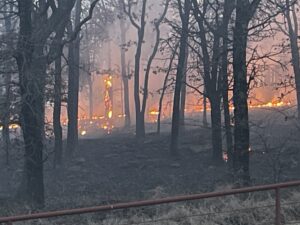
On April Fool’s Day, Peg and I and a lot of other people, just as Dorothy, had the everyday values of home reinforced by an F1 tornado that roared through our usually rather uneventful lives. We had become inured to such unappreciated comforts as roofs and electricity. We expected that nothing unexpected would disturb our reverie.
From childhood one of my greatest pleasures has been watching and feeling a storm lazily working from calm to possible calamity. I know I am joined by many people who enjoy and are excited by slowly tumbling grey clouds in the distance that metamorphize into colliding black clouds that envelope lightning bolts and driving rain. Few things are as rare and pleasurable as the acrid smell of ozone. Perhaps it is the foreboding that storms represent, much like skiing down a mountain or watching your favorite sports team when it is one point behind with a minute to go. Regardless, few things make humans appreciate being human as does a roiling and thundering storm.
When Peg stepped out on our veranda to check on the strange sounds coming at us from the southwest, she quickly turned, ran back in and said, “Jim I hear THE TRAIN!” We huddled momentarily in an interior bathroom, but the siren call of a mighty natural event was too strong. We had to join in the grand dance so we took deep breaths and were mesmerized by prairie grasses waving like laundry flapping on a clothesline; you do remember those, right?
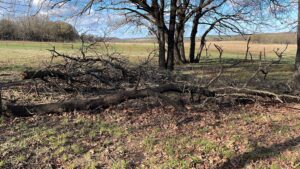
After a night of agitated wonder and worry and hours without power, we ventured out to find a few items from a neighbor’s ranch but no damage to ours except a couple of downed trees and quite a few broken limbs. Of course, Peg has already assigned me to clean-up duty. Once we had used our cellphones to make sure there was no loss of life and only some unfortunate damage to a few residences, we felt much as a speeding motorist who hears a police siren behind them, but relaxes as the officer flies on past in pursuit of a more egregious offender. It is exhilarating to be shot at and missed.
As General Patton said about war, “God, help me I do love it so.” Peg and I, and maybe you too, Gentle Reader, do so love a “good” storm. Of course, sometimes a storm brings loss of lives and property. Then we are forcefully reminded of what we truly have and that there really is, “No Place Like Home.”