• Skip to primary navigation
  • Skip to main content

James M. Redwine

  • Books
  • Columns
  • 1878 Lynchings/Pogrom
  • Events
  • About

Martyrs

Alexei Navalny

February 23, 2024 by Peg Leave a Comment

Forty-seven-year-old lawyer and politician Alexei Navalny died in a Russian prison February 16, 2024. He was serving a nineteen-year sentence for opposing and exposing the corrupt government of Vladimir Putin. Navalny had survived an August, 2020 poisoning through treatment at a hospital in Berlin, Germany. He voluntarily returned to Russia in January, 2021 where he was arrested and imprisoned. He is survived by his widow Yulia neé Abrosimova Navalnaya who has staunchly supported Alexei’s courageous public struggle for justice. Yulia vows to continue their Quixotic crusade. Why continue and what has Navalny’s life mattered are pervading questions?

Navalny was born in Russia June 04, 1976. His family has roots in Ukraine and Navalny spoke Russian, Ukrainian and English. Navalny’s daughter became a student at Stanford University in 2019 and Navalny was on a fellowship to Yale University in 2010. Most likely Navalny’s ties to Ukraine and America factored into the Russian government’s constant campaign to denigrate, marginalize and punish his populist words and actions opposing Russia’s autocratic rule including its invasion of Ukraine.

Navalny had to know his return to Russia would lead to his imprisonment and probably death. He surely also knew his valiant struggle was a mere beau geste that was akin to flinging flowers at the crush of Russian tanks. And he could have had a comfortable and financially rewarding life with his wife and two children in several western countries. So, once again, why?

In Miguel de Cervantes’ Don Quixote that was the inspiration for Dale Wasserman’s musical The Man of La Mancha, the feckless hero is fantasizing while in prison waiting to face the Spanish Inquisition. Navalny was not a foolish romantic in a frozen Russian gulag awaiting Putin’s tender mercies. Navalny undoubtedly realized his inevitable fate if he persevered in his one-man quest for justice. He also surely knew his and his family’s sacrifices would do little to change the course of history.

So we who watched his holy crusade from a safe distance are left to puzzle out, Why? What, if anything, did it all mean? What do the sacrifices of anyone who casts themselves against the barricades of injustice in a seemingly impossible dream mean?

The music and lyrics of Mitch Leigh and Joe Darion ask and answer this ageless mystery of why some people give everything for an ideal:

“This is my quest
To follow that star
No matter how hopeless
No matter how far 

To fight for the right
Without question or pause
To be willing to march into hell
For that Heavenly cause 

And I know if I’ll only be true
To this glorious quest
That my heart will be peaceful and calm
When I’m laid to my rest 

And the world will be better for this
That one man, scorned and covered with scars
Still strove with his last ounce of courage
To reach the unreachable star”

To soldier on when the battle looks unwinnable is what makes people and life worthwhile. As Robert Frost might say, it is the struggle, not the outcome, that matters. Alexei Navalny faced the unbeatable foe of Putin’s Russia with full knowledge his efforts’ likely result would not be immediate change. What makes him heroic is his fortitude to strive anyway. And, if enough people are inspired by his quest, perhaps it will not have been in vain.
Share this:

  • Share on Facebook (Opens in new window) Facebook
  • Share on X (Opens in new window) X
  • Email a link to a friend (Opens in new window) Email
  • Share on WhatsApp (Opens in new window) WhatsApp

Like this:

Like Loading...

Filed Under: Authors, Democracy, Events, Funerals, Gavel Gamut, Martyrs, Russia, World Events Tagged With: Alexei Navalny, courageous, hero, James M. Redwine, Jim Redwine, martyr, quest for justice, Russian gulag

November Re-Visited

November 18, 2021 by Peg Leave a Comment

As first light appeared on the snow covered ground the morning of November 27, 1868, Cheyenne Chief Black Kettle emerged from his tepee as a woman came running across a stream of the Washita River screaming, “Soldiers, soldiers!” Black Kettle must have thought he was re-living the morning of November 29, 1864 on the banks of Sand Creek, Colorado Territory. That is when and where Colonel John Chivington and seven hundred troops of the U.S. Cavalry massacred a large number of Black Kettle’s tribe.

Black Kettle had settled his tribe at Sand Creek at the suggestion of U.S. Cavalry Major Scott Anthony based on the Ft. Wise Treaty of 1861 signed three years earlier. Major Anthony gave Black Kettle a white flag of truce to display to any soldiers who might come upon Black Kettle’s tribe and mistake its members as hostiles. Chivington ignored it. Only three years after the Sand Creek betrayal, Black Kettle and the United States at the Council of Medicine Lodge, Kansas reached another peace treaty ensuring safety and hunting rights for the Cheyenne along the Washita River Valley in Indian Territory (Oklahoma).

During the Sand Creek incident Black Kettle’s wife was shot several times but survived. His wife and he were not so fortunate at The Washita. Lieutenant Colonel George A. Custer and members of the U.S. Cavalry were acting on orders from General Philip H. Sheridan to: “Kill or hang every warrior. Bring back all women and children.” Both Black Kettle and his wife, Medicine Woman, were shot dead while trying to flee.

Oklahoma history professor Arrell Morgan Gibson (1921-1987) in his widely used textbook, The History of Oklahoma, first published in 1972, at page 94 describes The Washita incident:

“During 1868 the tribes of western Indian Territory had been slow in settling on their reservations assigned by the Medicine Lodge treaties. Some warrior bands had raided settlements on the border. To punish these Indians, the Seventh Cavalry, led by George Armstrong Custer, rode out of Fort Supply (in what is now western Oklahoma) in late November 1868. At daybreak on November 27, Custer and his troops reached the Washita River and made a surprise attack at Black Kettle’s Cheyenne camp. The Seventh Cavalry killed more than one hundred warriors and took fifty women and children as prisoners. The soldiers burned the village and captured a large herd of horses. Chief Black Kettle was among the dead. The Battle of the Washita was more of a massacre than a battle.”

There are other descriptions of The Washita incident. One of the versions most sympathetic to the Indians is contained within Oklahoma historian Charles J. Brill’s (1888-1956) account, Custer, Black Kettle and the Fight on the Washita, that was first published in 1938. Brill reported that Custer’s plan was to use his five-to-one advantage over the Cheyenne and surround the sleeping Indians:

“Custer was not long determining his plan of attack. This time (unlike Sand Creek) there would be no opportunity for his intended victims to escape by flight. Before morning he could surround the village. At a given signal the encircling battle line would converge on the unsuspecting Indians, who then would be completely at his mercy. It would be a wipe-out.”

See p. 148

And there are those who observed The Washita incident in more generic terms. In his The Battle of the Washita historian and professor Stan Hoig (1924-2009) says of Sand Creek and The Washita:

“That both events were massacres-which utilized the element of complete surprise against a people who did not consider themselves to be at war in which troops who had orders to kill anyone and everyone before them made no attempt to allow surrender-is hardly deniable by any accepted use of the word ‘massacre’.”

See p. xiii.

Professor Hoig told the story of The Washita as a clash between cultures:

“At stake were the will and conscience of the United States in resolving the great dilemma of the American Indian. It was an issue in which no middle ground was begged, and one for which history offered no definitive answer concerning the rightness or wrongness of one society and people overcoming and displacing another. At hand was not only the question of human morality but also the march of empire and the inevitable contest between barbarism and civilization.”

See p. 184

Oklahoma in November can range from the temperate to the freezing such as occurred on November 16, 2021 (76℉) and November 19, 2021 (31℉). That there was a foot of ice and snow surrounding Black Kettle’s village on November 27, 1868 is not without precedent and that much more died that day than principle and morality is neither.

A special thank you is due to Cheryl Salerno, Librarian of the Oklahoma Wesleyan University Library
in Bartlesville, Oklahoma for her courtesy and assistance.

Share this:

  • Share on Facebook (Opens in new window) Facebook
  • Share on X (Opens in new window) X
  • Email a link to a friend (Opens in new window) Email
  • Share on WhatsApp (Opens in new window) WhatsApp

Like this:

Like Loading...

Filed Under: America, Events, Gavel Gamut, Martyrs, Military, Native Americans, Oklahoma, United States, War Tagged With: Arrell Morgan Gibson, Charles J. Brill, Chief Black Kettle, Council of Medicine Lodge, Ft. Wise Treaty, George A. Custer, James M. Redwine, Jim Redwine, John Chivington, massacre, Medicine Woman, morality, Philip H. Sheridan, principle, Professor Stan Hoig, Sand Creek, Scott Anthony, Seventh Cavalry, The Washita, Washita River, white flag of truce

A True Depression

August 1, 2020 by Peg 1 Comment

If a recession is when your neighbors lose their jobs but it is a depression when you lose yours, what is the analogy for our society’s losses due to ’Ole 19? Let me suggest that for Peg it was when she finally submitted herself to asking me to cut her hair. Yep, it’s complete capitulation; 19 can claim total victory. I should be able to show you photographic proof but it turns out that a wife’s hirsute humiliation is in the same category of bad husbanding as failing to separate the whites and colors for the laundry. No pictures of my artistry were allowed. In fact, Peg has found a new use for the flowered bandana she uses as a face mask; it now covers the top of her head too. And my attempts to assure her that within a few months her hair will grow back just seem to exacerbate the situation. Please allow me to digress.

Gentle Reader, you may have noticed it is hot in July and August near the latitude along the Mason-Dixon Line. Well Peg, who was born in upstate New York, had not quite acclimated to the previous weeks of 100-degree temperatures. Her Joan of Arc length hair tended to stick to her forehead and the back of her neck whenever she lugged water to her flowers and her vegetable garden. The martyr-type comparison will make sense by the time you finish the column. I was understanding and sympathetic, but my advice that Mother Nature would eventually provide rain was not received gladly. She stubbornly persisted and even suggested I could get involved if the TV re-runs of old golf matches didn’t interfere. Surely, we need not revisit that painful discussion.

The real problem is not me but ’Ole 19. Peg used to go to the beauty shop to get her hair cut. Or, when we still lived in Indiana, our daughter, Heather, who is a beautician would take care of it. However, now, as we do not wish to contribute to 19’s macabre statistics, we have socially isolated since our last foray out to eat which was March the 5th. We wear masks, we wash our hands, we ignore our friends and family, we shop online, we eat lots of tuna. But we both knew the Corona Virus had achieved complete domination when Peg said last week, “Jim, I just can’t stand this heat and having my hair string down my face and neck. Nobody but you is ever going to see me again anyway (I thought that a little overly dramatic) so you are going to have to cut it. Come watch these YouTube videos and try to pay attention.”

Well, it didn’t look that hard to me. I remember when I got my hair cut in Pawhuska, Oklahoma by Clyde Ensley or Bob Butts or in Mt. Vernon, Indiana by Steve Burris. Heck, it appeared about like cleaning a squirrel or a chicken. Just slice here, snip there, shear off the sides. No problem. After watching for ten minutes or so I was pretty sure I could give Vidal Sassoon a run. “Peg, get a towel and I’ll grab a pair of scissors and the electric clippers you used to use on our dearly departed dog and meet you on the front porch.”

It probably would have turned out better if Peg had not sat as if she were an unfortunate customer of an electric chair and if she hadn’t jumped and squirmed each time the clippers whirred and the scissors snipped. Regardless, in my unbiased opinion I did a fine job. If the bowl I used had fit better it would have helped. I can only guess at Peg’s opinion as she hardly has spoken to me for three days and when she does it is difficult to make out what she is saying amid the shrieks, sobs and expletives as she tries to pull her hair back to its former length.

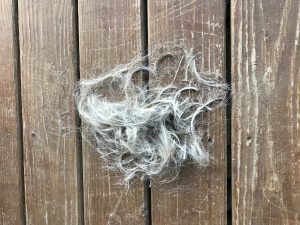
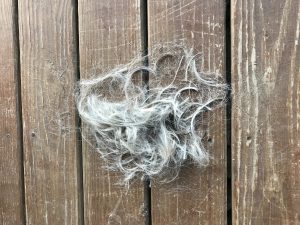
Hair on the porch floor

Share this:

  • Share on Facebook (Opens in new window) Facebook
  • Share on X (Opens in new window) X
  • Email a link to a friend (Opens in new window) Email
  • Share on WhatsApp (Opens in new window) WhatsApp

Like this:

Like Loading...

Filed Under: COVID-19, Females/Pick on Peg, Gavel Gamut, Indiana, JPeg Osage Ranch, Martyrs, Mt. Vernon, Oklahoma, Pawhuska, Personal Fun Tagged With: 'Ole 19, a true depression, beautician, beauty shop, Bob Butts, Clyde Ensley, Covid Virus, electric chair, electric clippers, expletives, Gentle Reader, hair cut, Indiana, James M. Redwine, Jim Redwine, Joan of Arc, martyr, Mason-Dixon Line, Mother Nature, Mt. Vernon, Oklahoma, pair of scissors, Pawhuska, Peg, recession, shrieks, sobs, Steve Burris, upstate New York, Vidal Sassoon

Do We Want To Fool Mother Nature?

April 12, 2019 by Peg Leave a Comment

China’s National Science Review reported in March 2019 that Bing Su of the Kunming Institute of Zoology has inserted human genes into monkeys. His apparent goal was to investigate how the brains of early primates developed along different paths with monkeys remaining in the trees and Homo sapiens progressing to the Internet.

Chinese scientist He Jiankui while at the Southern University of Science and Technology in Shenzhen, China claims to have modified the genome, the DNA, of twin female humans in an attempt to preempt the possibility of them someday contracting the HIV virus.

Both of these researchers dealt with DNA and CRISPR. DNA is familiarly known as deoxyribonucleric acid and CRISPR is an acronym for clustered regularly interspaced short palindromic repeats. The genome is the famous Double Helix discovered by James Watson and Francis Crick in 1953. DNA is our 23 pairs of intertwined chromosomes that make us us. CRISPR is the DNA from viruses that might protect us from other viruses such as HIV.

Gentle Reader, if I were you I would not rely upon this exposition of biological knowledge from me for answers you may wish some paid tutor to give on your child’s SAT test. Please remember, I was an English major.

Instead of science, let’s you and I turn to literature for our analysis of genetic engineering. We can start at the beginning. In Genesis, that was written about 400 BC if we look to the Dead Sea Scrolls for a date, Yahweh was doing a little human manipulation when he decided Adam needed a companion. The DNA from Adam’s rib was used to create Eve. The Bible does not explain why two Adams was not the result. However, blissful ignorance was the life these humans led until fruit from the Tree of Knowledge was eaten. Some may think it’s been all downhill since.

About 300 years before Adam and Eve those marvelous Greeks were writing about Achilles who was the product of a human, Peleus, and the immortal nymph, Thetis. This mixing of DNA’s of differing species helped lead to the sack of Troy.

Of course, Jesus, about 2,000 years ago, was a similar product of the human Mary and a god who used genetic merging to create a Prince of Peace. To my way of thinking this was evidence there may be some true benefit to Mankind from such genomitry.

As for me, I could support the manipulation of human genetics if we could create drivers who would not clog up the passing lane and who could survive at least a few moments without a cell phone stuck in their ear. Also, as a husband, could we not embed in wives a gene that allows for beer and football instead of yard work?

Share this:

  • Share on Facebook (Opens in new window) Facebook
  • Share on X (Opens in new window) X
  • Email a link to a friend (Opens in new window) Email
  • Share on WhatsApp (Opens in new window) WhatsApp

Like this:

Like Loading...

Filed Under: Gavel Gamut, Martyrs, Personal Fun Tagged With: Achilles, Adam, Bing Su, Dead Sea Scrolls, DNA CRISPR, Eve, Genesis, genome, Gentle Reader, Greeks, He Jiankui, HIV, James M. Redwine, Jesus, Jim Redwine, Mary, Peleus, Prince of Peace, Troy

Merry Christmas to Us

December 27, 2018 by Peg Leave a Comment

If the message of Christmas were simply gifts of gold, frankincense and myrrh, etc., etc., it would have died out about as unceremoniously as the current stock market. Therefore, we should probably consider if there are other possibilities.

When the Jews were conquered by the Romans they reacted as most oppressed people would. Their cultural myths concentrated on deliverance. In general, deliverance from an omnipotent force can take three approaches: armed rebellion; assimilation; and/or peaceful coexistence.

To some of the Hebrews their hoped-for messiah would be a warrior who would throw off the Roman rule. To others the approach was more of total capitulation. But for many the thought was a Prince of Peace would provide the best hope. To fight Rome, as the destruction of the Jewish temple in 70 A.D. showed, was to court annihilation. As the Jewish historian Josephus Flavius chronicled, revolt by the Jews brought total devastation to their society.

On the other hand, the Romans and Jews of that time did not appear to be interested in peaceful coexistence except upon terms set by Rome. That left real deliverance from bondage for the Jewish people to be more metaphysical, that is, through philosophy not armed resistance. And it took 2,000 years, the horrors of WWII and the benevolence of the world’s new Rome, the United States of America, before Jewish self-determination could be realized. Still true peace as called for by Jesus is elusive. The Middle East continues to be an area where armed rebellion is both ubiquitous and futile.

Perhaps we should give the true message of Christmas a chance. I know President Trump has his faults and I carry no brief for much of what our government does in our name. However, to withdraw from foreign conflicts that simply kill thousands, destroy cultures and cost trillions appears to me to be the course Jesus would call for. Merry Christmas and welcome home to our soldiers, sailors, airmen and marines from Syria, Iraq, Afghanistan and wherever else we are engulfed in endless counterproductive conflicts. And if we really are the new Rome maybe we should learn from the military fiascoes of that ancient one.

The debacle on Wall Street might best be addressed not by quarrelling over interest rates but by investing our treasure in ourselves instead of squandering it in the vain pursuit of a Pax Americana.

Share this:

  • Share on Facebook (Opens in new window) Facebook
  • Share on X (Opens in new window) X
  • Email a link to a friend (Opens in new window) Email
  • Share on WhatsApp (Opens in new window) WhatsApp

Like this:

Like Loading...

Filed Under: America, Christmas, Democracy, Gavel Gamut, Martyrs, Middle East, Patriotism, War Tagged With: armed rebellion, assimilation, debacle on Wall Street, frankincense, gold, Hebrews, hope-for Messiah, invest our treasure in ourselves, James M. Redwine, Jesus, Jews, Jim Redwine, Josephus Flavius, Merry Christmas to Us, Middle East, myrrh, Pax Americana, peaceful coexistence, President Trump, Prince of Peace, Romans, Rome's military fiascoes, stock market, true message of Christmas, withdraw from wars, WWII

Taps

February 17, 2017 by Peg Leave a Comment

I do not play the bugle so any veteran’s farewell from me must come in words. I wrote this tribute to Gene McCoy, Harold Cox and all Korean War Veterans in September 2005. When my friend Gene McCoy passed away February 12 (Lincoln’s birthday), I was reminded of his many years of service to the rest of us about which I had written twelve years ago. Gene told me then he appreciated the bon mots. Because he was such a considerate friend, I am confident he would say the same thing now.


AN UNKNOWN VICTORY

You name the WAR:

Two countries are created from one by the greatest military power in the world and are monitored by the United Nations;

One country led by a ruthless dictator invades the other in spite of the United Nations warnings not to;

The Secretary General of the United Nations declares, “This is a war against the United Nations.”;

A United States President leads a coalition of world leaders to unite to drive the invaders out and re-establish the status quo;

An American general was placed in charge of the United Nations forces;

While many countries offered some help, the American military provided more than half of a million personnel in the war;

The aggressors were driven out of and liberty was restored to the invaded country; and

The mission for which Americans fought and died was accomplished.


If you said The Gulf War of 1990-1991, that is understandable. Almost all Americans supported that war and recognized that victory. However, I am talking about the Korean War of 1950-1953. It too was a great victory for American and United Nations interests and helped prevent World War III. We owe a huge debt to our Korean War veterans.

Two of those heroes (they just hate to be called that but, hey, it’s my column and facts are facts) are Posey County natives and brothers-in-law Harold Cox and Gene McCoy.

Harold fought with the U.S. Army’s 25th Division which suffered many casualties and bore much of the fighting in Korea. Harold was an infantry rifleman and was the jeep driver for his company commander.

Gene was a combat engineer with the Army’s 84th Engineers Battalion and, also, served as a courier/mail deliverer.

Harold was on the frontlines and Gene was building wooden bridges about 1000 yards behind those lines. Gene says Harold had it a lot rougher than Gene.

Both suffered the 20 below zero cold, the stifling heat and humidity, the loneliness, home sickness and fear in what those not there called a “police action.”

Harold said one of his worst memories, outside of dodging enemy mortar rounds for a solid year of combat, was the stench of the human waste the impoverished Koreans would save all winter and fertilize their rice paddies with in the spring. Gene, also, mentioned that nauseating smell and the mud and flooding caused by the lack of vegetation due to constant shelling.

When Gene first arrived in Korea they put his outfit on a train which stopped frequently. Each time it stopped the young soldiers were given a few rounds of ammunition and ordered out to guard the train from sabotage. Gene said this initiation to Korea was more than a little unsettling.

Harold told me that the traffic signs in the war were a bit more to the point than those back home. On one particularly dangerous stretch of road a sign advised:

“Get your ____ in gear and drive like ____! The NK can see you.”

Harold paid attention.

Harold and Gene came home and re-started their lives. Harold served as Mt. Vernon’s Water Superintendent for several years in the 1980’s and1990’s. Gene served as a Mt. Vernon City Councilman and the Posey County Recorder. Gene is (in 2005) currently Posey County’s Veterans Affairs Officer. They both raised families and went on publicly as if there had been no Korean War. However, privately what General Douglas MacArthur called “the strange, mournful mutter of the battlefield” never left their consciousness.

Of course, there was a Korean War and it helped save you and me from another world war. It was a largely unappreciated “mission accomplished.” Thank you Harold and Gene and all your fellow Korean War veterans.


As General MacArthur might have said, both the old song and those it honors quietly fade away:

Sun has set, shadows come,

Soldier rest, your race is run.

Share this:

  • Share on Facebook (Opens in new window) Facebook
  • Share on X (Opens in new window) X
  • Email a link to a friend (Opens in new window) Email
  • Share on WhatsApp (Opens in new window) WhatsApp

Like this:

Like Loading...

Filed Under: America, Democracy, Gavel Gamut, Martyrs, Patriotism, Posey County, War Tagged With: An Unknown Victory, Army 84th Engineers Battalion, combat engineer, Gene McCoy, General Douglas MacArthur, Gulf War, Harold Cox, infantry rifleman, James M. Redwine, Jim Redwine, Korean War Veterans, Mt. Vernon City Councilman, Mt. Vernon Water Superintendent, police action, Posey County Beterans Affairs Officer, Posey County Recorder, Taps, U.S. Army 25th Division, war

  • Page 1
  • Page 2
  • Go to Next Page »

© 2026 James M. Redwine


Loading Comments...
 

    %d